ArtBo - Pon de tu (p)arte
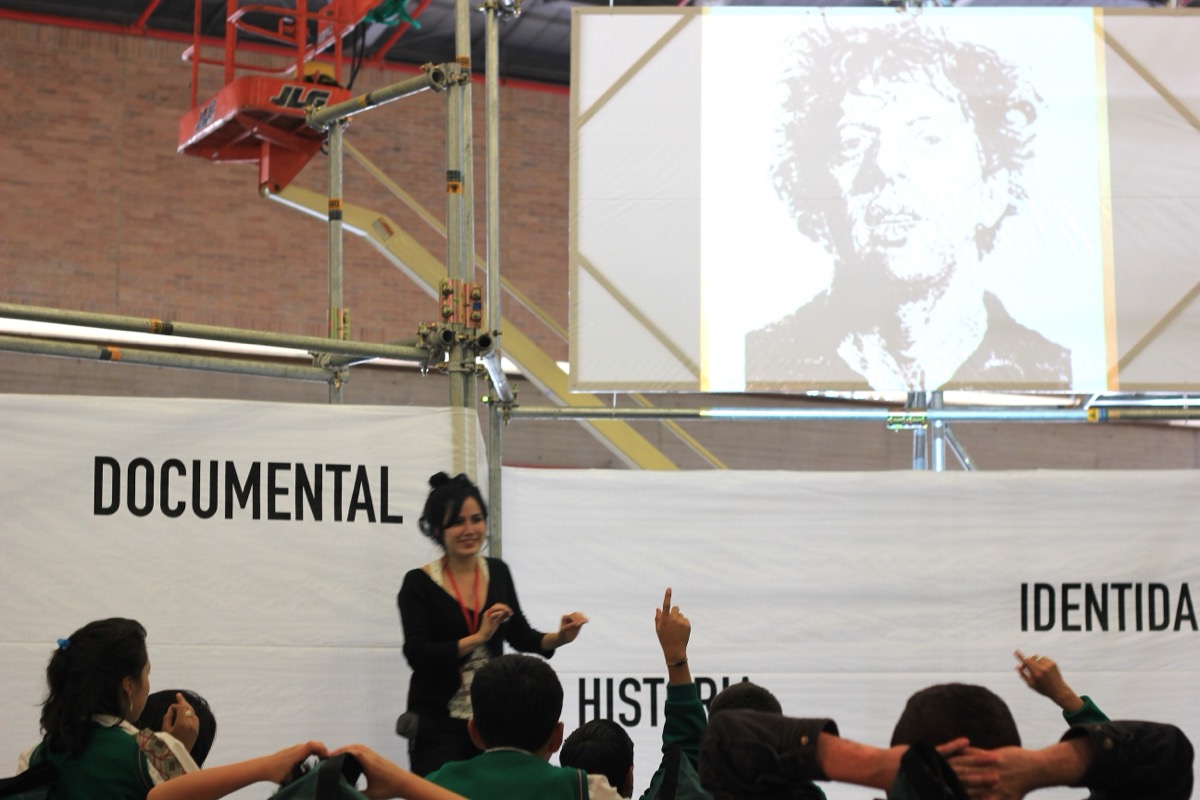
In 2012, two years of pedagogical experimentation at Galería Santa Fe came together in the largest project I had undertaken to date: Pon de tu (p)arte, an art mediation platform developed for ArtBo, Bogota’s international contemporary art fair. The platform took the form of a 700m2 educational pavilion running in parallel to the fair throughout the week, designed to bring school groups, families, and general publics into active and meaningful engagement with contemporary art. This was an audience that the fair itself, oriented toward collectors and the art market, was not structured to reach.
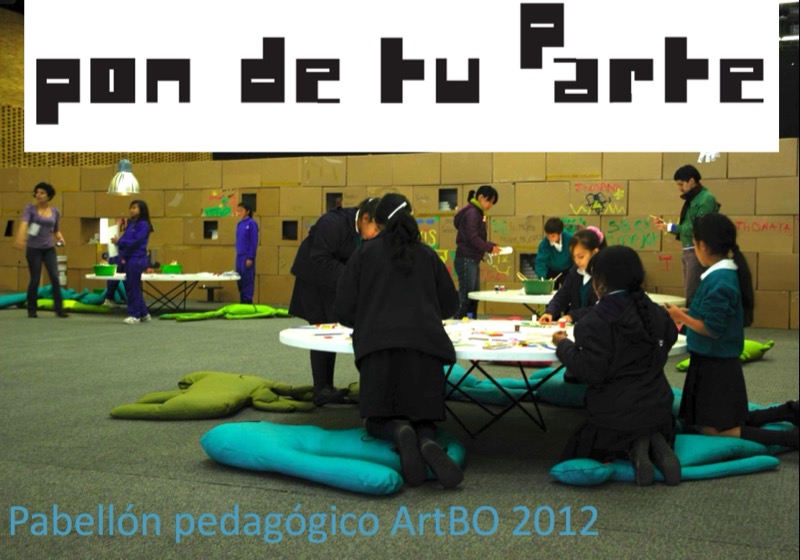
The pavilion received over 2,100 participants across the week, moving through workshops, discussions, and guided encounters with artworks developed in collaboration with the Art Museums of the Banco de la Republica, whose catalogue provided the visual and conceptual material at the heart of the program. The pedagogical design drew on the framework of meaningful experiences that I had been developing through my research and practice at Galería Santa Fe: the idea that encounters with contemporary art, when well mediated, can open genuine processes of critical reflection, symbolic construction, and dialogue between people who would not ordinarily find spaces for that kind of exchange in urban public life.
The team of twenty facilitators who implemented the program was drawn largely from my development and approach to the Escuela de Guias, the art mediation training program I ran at Galería Santa Fe. Several of them were former interns who had been trained in that setting over the previous two years, making the ArtBo platform, in a concrete and direct sense, the harvest of that earlier work. The scale of the project demanded not only pedagogical design but coordination, training, and real-time facilitation across a dense and varied program running simultaneously in multiple spaces of the pavilion.
The reflections generated by this experience formed the basis of a keynote I presented at the OLA (Observatory of Latin America) seminar at The New School in New York in 2013, supported by the Nestor Kirchner Fellowship. The paper examined the potential of art mediation to create meaningful learning experiences within critical pedagogical frameworks developed for public spaces, and its role in the broader life of civil society. At OLA’s invitation, a fully developed version of the text was published on their platform in 2014.
Maria Villa, “Experiencias significativas y laboratorios de mediacion del arte,” Observatory of Latin America (OLA) / The New School, 2014. [Online publication, invited] - presented as keynote at the OLA seminar, New York, 2013, supported by the Nestor Kirchner Fellowship.